





Pathology underpins around 95% of clinical pathways and NHS laboratories process more than a billion diagnostic tests each year. Yet despite its central role in patient care, pathology remains one of healthcare’s least understood specialties.
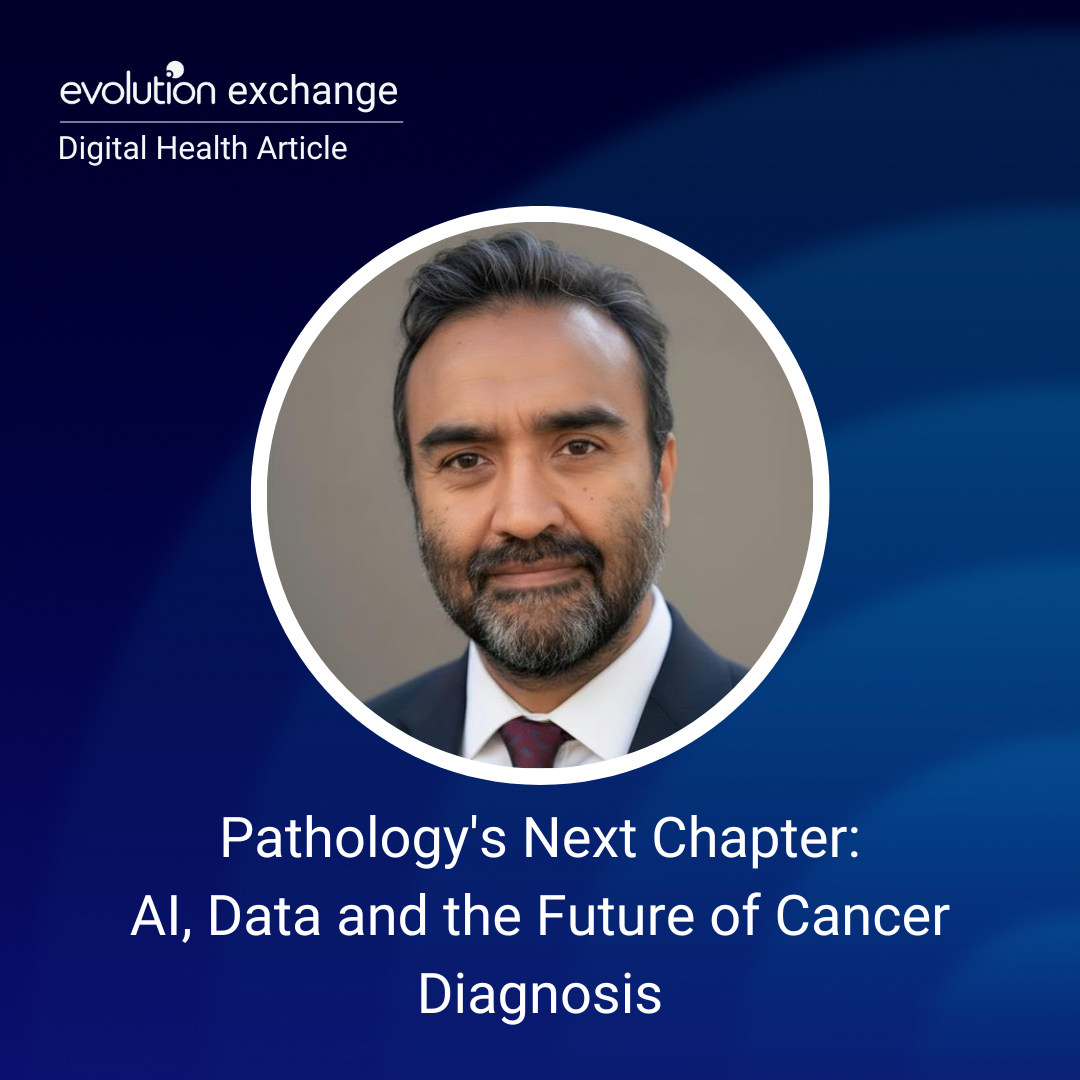
During a recent conversation with Dr Muhammad Aslam, Consultant Pathologist and National Clinical Lead for Digital Pathology and AI in Wales, two statistics stood out.
Following the introduction of an AI-supported prostate cancer algorithm in Wales, cancer detection increased by 13%.
Over the past four years, AI-supported prostate pathology services in Wales have generated almost 90TB of digital pathology data.
Together, they illustrate how pathology is evolving from a laboratory-based specialty into a data-driven discipline at the heart of modern cancer care.
For many outside pathology, a laboratory test can seem straightforward: a sample goes in and a result comes out. Muhammad explained that the reality is far more complex.
Behind every pathology result sits a highly controlled and complex workflow, with numerous stages that can influence quality, accuracy and ultimately patient outcomes.
The role of the pathologist has also evolved.
Where pathology once focused primarily on diagnosing disease, it now plays a critical role in treatment decisions. Modern pathology reports increasingly include information on tumour type, stage, differentiation and molecular characteristics that help determine which therapies are most appropriate for individual patients.
As Muhammad put it, pathology now sits at the intersection of clinical expertise and scientific advancement.
Perhaps the most significant shift has been the move from glass slides and microscopes to digital pathology.
Historically, pathology generated relatively little structured data. A pathologist would examine a slide under a microscope, interpret what they saw and document their findings in a report.
Digital pathology changes that equation entirely.
Slides become high-resolution digital assets that can be stored, shared, analysed and revisited. The result is a rapidly growing data resource that has the potential to transform diagnostics, research and cancer care.
That data foundation is now enabling the next stage of development: artificial intelligence.
At a time when pathology services face growing demand, increasing complexity and workforce pressures, these technologies have the potential to improve both quality and sustainability.
Muhammad shared Wales’ experience of deploying AI in prostate cancer diagnostics, where the technology acts as an additional layer of review for pathologists. Rather than replacing clinical expertise, it highlights suspicious areas that warrant closer examination.
The impact has been significant. Wales’ experience demonstrates how AI can support pathologists in identifying suspicious areas that warrant further review. As with any clinical AI deployment, implementation requires careful validation, governance and clinical oversight to ensure safe and effective use in clinical practice.
Equally important, AI is helping reduce variation and improve consistency. As Muhammad noted, even experienced pathologists can miss subtle abnormalities within large volumes of tissue. AI provides a second set of eyes that never tires and never loses concentration.
The benefits are also being seen elsewhere. In breast pathology, algorithms are helping automate parts of the workflow and accelerate access to critical therapeutic markers, supporting faster multidisciplinary decision-making and reducing delays in patient pathways.
Yet the most interesting part of the discussion was not about scanners or algorithms.
It was about what happens when pathology data is combined with other diagnostic data.
Alongside digital pathology, healthcare is generating vast quantities of information through genomics and medical imaging. Individually these datasets are valuable. Combined, they may unlock entirely new insights into disease behaviour and treatment response.
Two patients can be diagnosed with what appears to be the same cancer at the same stage. Yet their outcomes may be completely different. Understanding why remains one of the biggest challenges in modern medicine.
Muhammad believes the next generation of algorithms will help answer those questions by identifying patterns across pathology, radiology and genomic datasets that would be impossible for any individual clinician to detect alone.
If that vision becomes reality, the role of the pathologist will continue to evolve from diagnostician to interpreter of increasingly rich and interconnected sources of clinical information.
For me, that’s the real story.
The real significance of digital pathology is not the scanner, the algorithm or even the data itself.
It is the opportunity to connect pathology with imaging, genomics and other diagnostic disciplines to create a richer understanding of disease than has ever been possible before.
If that happens, pathology will not simply support clinical decision-making. It will increasingly shape how diseases are understood, treatments are selected and outcomes are improved.